

Skin cancer is the most common cancer globally, with an estimated 5.4 million new cases diagnosed annually. This high prevalence is largely attributed to exposure to ultraviolet (UV) radiation from the sun.
In countries like Australia, with a high UV index year-round, skin cancer rates are particularly concerning. According to the Cancer Council Australia, around 2 in 3 Australians will be diagnosed with skin cancer by the time they’re 70.
Early detection is crucial for successful skin cancer treatment. By raising awareness of the different types of skin cancer and the importance of regular checks, we can empower individuals to take charge of their skin health and potentially save lives.
Major Types of Skin Cancer
Basal Cell Carcinoma (BCC)
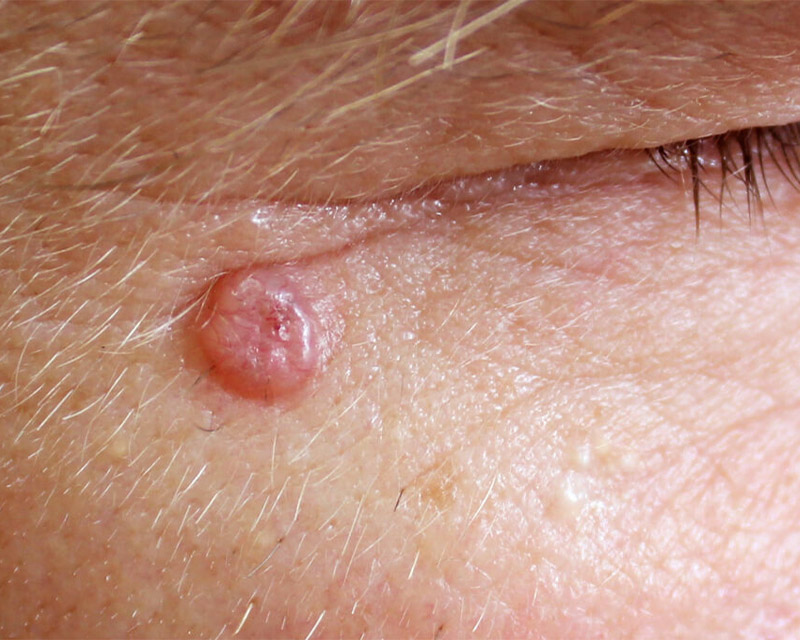
Basal cell carcinoma (BCC) is the most common type of skin cancer, accounting for roughly 80% of all diagnosed skin cancers worldwide. It arises from the uncontrolled growth of abnormal basal cells located in the deepest layer of the epidermis (the outermost layer of your skin).
BCCs typically develop on areas of the skin that have received significant sun exposure throughout a person’s lifetime. These areas commonly include the following:
- Head and neck (especially the ears, nose, and lips)
- Scalp
- Chest
- Shoulders
- Back
While BCCs can appear in various forms, some common visual signs include:
- A pearly or waxy bump on the skin
- A flat, scaly patch with a red, pink, or brown tint
- A sore that bleeds easily and heals slowly but then returns
- A red, itchy patch that resembles a scar
The good news is that BCCs are generally slow-growing cancers. Unlike melanoma, they rarely spread to other parts of the body. However, if left untreated, BCCs can grow larger and potentially invade nearby tissues, causing significant disfigurement.
Early detection and treatment are essential for a complete cure and minimising potential damage.
Squamous Cell Carcinoma (SCC)
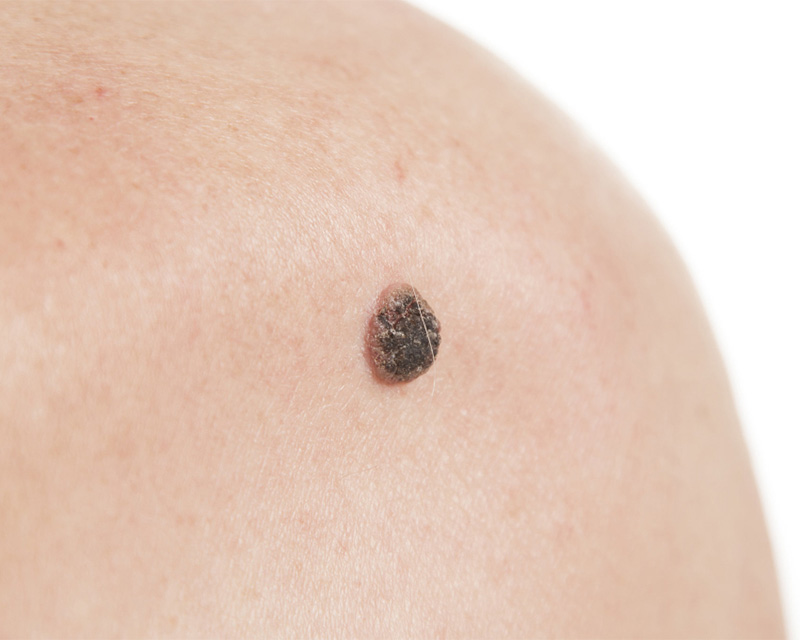
Squamous cell carcinoma (SCC) is the second most common type of skin cancer, accounting for approximately 1 in 5 of all non-melanoma skin cancers diagnosed in Australia. It originates from the uncontrolled growth of abnormal squamous cells, which make up the flat, scale-like cells on the outermost layer of your skin (the epidermis).
SCC typically develops on areas of the skin that have been exposed to significant amounts of ultraviolet (UV) radiation over time. These areas frequently include the following:
- Head and neck (especially the ears, nose, and lips)
- Scalp
- Arms and legs
- Back of the hands
However, unlike BCC, SCC can also develop in areas that haven’t received significant sun exposure, such as on pre-existing scars or inside the mouth, genitals, or anus.
SCC can manifest in various ways, but some common visual signs to watch out for include:
- A red, scaly patch that feels rough and crusty
- A firm raised bump that may bleed easily
- An open sore that doesn’t heal properly
Compared to BCC, SCC tends to grow at a faster rate. While it still rarely spreads to other parts of the body if detected early, neglecting SCC can lead to deeper invasion within the skin and potentially affect nearby lymph nodes.
Fortunately, early detection and treatment of SCC are highly successful, with excellent cure rates.
Melanoma
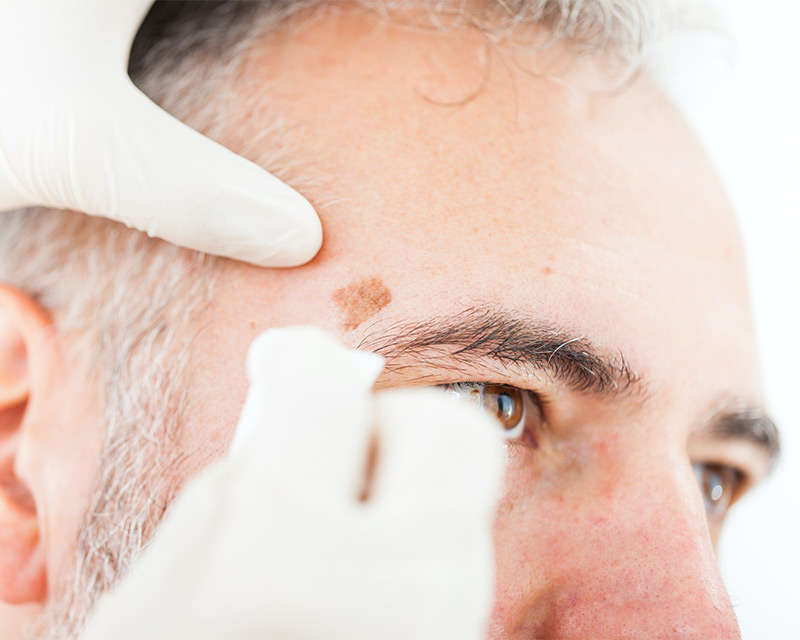
Melanoma is the most severe type of skin cancer, accounting for only about 1% of all skin cancers diagnosed globally. However, it’s responsible for the vast majority (around 90%) of skin cancer deaths. This stark contrast highlights the aggressive nature of melanoma if left undetected.
Melanoma arises from the uncontrolled growth of abnormal melanocytes. These pigment-producing cells are located in the deepest layer of the epidermis and are responsible for giving your skin its colour. Unlike BCC and SCC, which primarily develop in sun-exposed areas, melanoma can occur anywhere on the body, including:
- Skin
- Scalp
- Eyes
- Inside the mouth or nose
- Genitals
The challenge with melanoma lies in its diverse appearance. However, the ABCDE rule can be a helpful guide for recognizing potential warning signs:
- Asymmetry: One half of the mole doesn’t match the other.
- Border irregularity: The mole’s edges are uneven, ragged, or notched.
- Colour variation: The mole has different shades of brown, black, tan, red, white, or blue within it.
- Diameter greater than 6 millimetres (mm): The mole is larger than the size of a pencil eraser.
- Evolution: A mole changes in size, shape, or colour.
It’s important to remember that the ABCDE rule is a guide, and not all melanomas will exhibit every sign. If you notice any changes in a mole or any suspicious skin lesions, it’s crucial to consult a skin cancer clinic for a proper diagnosis.
The growth rate of melanoma can vary significantly. However, early detection remains paramount. Unlike BCC and SCC, melanoma can spread to other body parts through the lymphatic system and bloodstream if left untreated.
The earlier melanoma is detected, the better the prognosis. With early diagnosis and treatment, the 5-year survival rate for melanoma is very high. However, if melanoma progresses to advanced stages, the outlook becomes considerably poorer.
Less Common Types of Skin Cancer
While basal cell carcinoma, squamous cell carcinoma, and melanoma are the most prevalent types of skin cancer, there are rarer forms to be aware of.
Merkel cell carcinoma is an aggressive cancer that arises from Merkel cells, touch receptors in the skin. It can appear as a shiny, red, or purple bump and often develops in sun-exposed areas.
Sebaceous carcinoma is another uncommon cancer that originates in the skin’s oil glands. It typically presents as a slow-growing, painless bump on the face, eyelids, or scalp.
If you notice any unusual skin lesions, regardless of type, it is vital to do a skin cancer check for prompt diagnosis.
Importance of Early Detection
Early detection is the single most critical factor in successfully treating skin cancer. Most skin cancers, particularly basal cell carcinoma and squamous cell carcinoma, are highly treatable when caught early.
However, if left undetected, these cancers can grow deeper into the skin and potentially spread to other body parts, significantly complicating treatment and reducing the chance of a successful outcome.
Therefore, it is important to incorporate regular skin checks into your routine. Ideally, schedule a comprehensive skin cancer check with a doctor at least once a year. During this exam, the doctor will thoroughly examine your entire skin surface, looking for any suspicious moles or lesions.
However, you don’t have to rely solely on professional checkups. Regular self-examinations at home allow you to monitor your skin for any changes that may warrant further investigation. Here are some tips for self-examination:
- Examine your entire skin surface: Use a full-length mirror and a hand mirror to examine all areas of your body, including your scalp, the backs of your ears, your buttocks, and the soles of your feet. Consider using a partner or a handheld mirror to help you see hard-to-reach areas.
- Look for the “ugly duckling” sign: Pay close attention to any moles or lesions that appear different from the others in terms of size, shape, colour, or texture. This “ugly duckling” could be a potential sign of melanoma.
- Pay attention to changes: Track any changes in your existing moles or the appearance of new moles. Itching, bleeding, or crusting on a mole can also be warning signs.
Risk Factors for Skin Cancer
While anyone can develop skin cancer, certain factors can increase your risk. Understanding these risk factors empowers you to take proactive steps to protect your skin:
- Sun exposure (UV radiation): Ultraviolet (UV) radiation from the sun is the primary risk factor for skin cancer. Excessive sun exposure throughout your lifetime, including intense sunburns, damages the DNA in your skin cells and can trigger uncontrolled cell growth, leading to cancer.
- Fair skin, light hair and eyes: Individuals with lighter skin pigmentation naturally have less melanin, a pigment that offers some protection against UV rays. People with fair skin, light hair and eyes tend to burn more easily and have a higher risk of developing skin cancer.
- Personal history of sunburn or skin cancer: Having a history of severe sunburns, especially during childhood, significantly increases your risk of skin cancer later in life. Additionally, a previous diagnosis of skin cancer makes you more susceptible to developing another one.
- Family history of skin cancer: If you have close relatives (parents, siblings, or children) with a history of skin cancer, your risk is elevated. This could be due to shared genetics or sun exposure habits within the family.
- Weakened immune system: People with weakened immune systems due to conditions like HIV/AIDS, organ transplants, or certain medications are more susceptible to skin cancer. A compromised immune system may have difficulty fighting off abnormal skin cell growth.
When to See a Doctor
Don’t delay seeking professional help if you notice any concerning changes in your skin. Early detection is crucial for successful skin cancer treatment. There are some signs that warrant a visit to your doctor or dermatologist:
- Changes in existing moles: If a mole changes in size, shape, colour, or texture, particularly if it becomes asymmetrical or develops uneven borders, consult a doctor.
- New or unusual moles: The appearance of any new moles, especially if they look different from your others, necessitates a professional evaluation.
- Persistent skin problems: Any persistent itching, bleeding, or crusting on a mole or other skin area shouldn’t be ignored. Schedule an appointment with your doctor to rule out any underlying issues.
Conclusion
At Capstone Medical Centre, we understand the importance of skin health and early skin cancer detection. Our team of qualified doctors and dermatologists are dedicated to providing comprehensive skin cancer care.
We offer thorough skin checks to identify any suspicious lesions and can discuss a range of treatment options if necessary. Don’t wait until it’s too late. Take charge of your skin health and schedule a skin cancer check with Capstone Medical Centre today. Call us or visit our website to book an appointment.
Sources:
- aafp.org/pubs/afp/issues/2000/0715/p357.html
- mayoclinic.org/diseases-conditions/skin-cancer/symptoms-causes/syc-20377605
- ncbi.nlm.nih.gov/books/NBK321118/
- cancerresearchuk.org/about-cancer/skin-cancer/symptoms
- my.clevelandclinic.org/health/diseases/15818-skin-cancer
- myhealth.alberta.ca/Health/pages/conditions.aspx?hwid=tp12816
- cancer.org.au/blog/when-it-comes-to-skin-cancer-early-detection-is-the-key
- specialistaustralia.com.au/why-is-the-skin-cancer-rate-higher-in-australia/