

Menopause is a natural stage of life, but the years leading up to it can bring changes that are sometimes difficult to recognise. Perimenopause symptoms may vary between individuals. You might notice irregular periods, hot flushes, poor sleep, mood changes, brain fog or vaginal dryness. These changes often begin during the transition before menopause.
Some women experience only mild symptoms, while others find that menopause affects their sleep, work, relationships, sexual health and everyday wellbeing.
Knowing what to expect can make these changes easier to understand and help you recognise when it may be worth speaking with a GP. Treatment can range from lifestyle changes and non-hormonal options to menopausal hormone therapy (MHT).
At Capstone Medical Centre Southbank, our GPs can help you understand your symptoms, rule out other possible causes and discuss treatment options that suit your health needs and preferences.
What Are Perimenopause and Menopause?
Perimenopause symptoms mark the transition that happens before menopause. During this time, your levels of reproductive hormones, particularly oestrogen and progesterone, begin to fluctuate.
It commonly starts in your 40s, although some women notice symptoms earlier.
One of the first changes you may notice is a difference in your menstrual cycle. Your periods may become:
- irregular
- heavier or lighter than usual
- closer together or further apart
- occasionally missed
Perimenopause can last for several years.
Menopause occurs when you have gone 12 consecutive months without a menstrual period, provided there is no other medical explanation.
The average age of natural menopause is around 51, but every woman is different.
If menopause occurs before age 45, doctors consider it early menopause. If your periods stop before age 40, your GP will usually recommend further assessment because this may indicate premature ovarian insufficiency.
Why Is Understanding Menopause Important?
Menopause involves much more than your periods stopping.
Changing hormone levels can affect your sleep, mood, sexual health, muscles, joints and urinary and vaginal health. Midlife is also a useful time to review your bone health, heart health and other areas of preventive care.
Symptoms can look very different from one woman to another. You might struggle mainly with hot flushes and night sweats, while someone else may notice sleep problems, anxiety, brain fog or vaginal dryness.
Understanding these changes can help you recognise possible menopause symptoms and start a useful conversation with your GP about what may help.
Common Symptoms of Perimenopause and Menopause
Perimenopause and menopause can cause a wide range of symptoms. You may experience several at once, or only one or two.
Hot Flushes and Night Sweats
Hot flushes are one of the most familiar menopause symptoms. You may suddenly feel very warm, particularly around your face, neck or chest, and you may start sweating or notice skin flushing.
When hot flushes happen at night, they can wake you up and make it harder to get enough restful sleep. This can leave you feeling tired during the day.
Changes to Your Periods
Changes to your menstrual cycle often appear during perimenopause.
Your periods may become less predictable, and the amount of bleeding may change. You might also notice that your periods occur closer together or further apart.
However, you should not automatically assume that unusual or very heavy bleeding is part of menopause. Speak with your GP if you notice significant changes.
Sleep Problems
Menopause can make a good night’s sleep harder to achieve.
You may have trouble falling asleep, wake several times during the night or wake earlier than you normally would.
Night sweats can disturb your sleep, but some women experience sleep problems even without them.
Mood Changes
Hormonal changes during perimenopause can sometimes affect your mood and emotional wellbeing.
You may notice:
- irritability
- anxiety
- low mood
- increased emotional sensitivity
- reduced motivation
If mood changes feel significant, persistent or difficult to manage, speak with your GP https://capstonemed.com.au/services/mental-health/. You do not need to assume that every emotional change is simply something you have to tolerate during menopause.
Brain Fog and Difficulty Concentrating
Have you started forgetting words, losing your train of thought or finding it harder to concentrate?
Many women describe these experiences as “brain fog.”
Changes in concentration and memory commonly occur during the menopausal transition. Poor sleep and stress can also make these problems more noticeable.
Vaginal Dryness and Urinary Symptoms
Lower oestrogen levels can affect the vagina, vulva and urinary tract.
You may experience:
- vaginal dryness
- reduced lubrication
- irritation or burning
- discomfort or pain during sex
- urinary urgency or frequency
- recurrent urinary tract infections
Healthcare professionals often group these symptoms under the term genitourinary syndrome of menopause (GSM).
Although these symptoms are common, you do not have to simply live with them. Your GP can discuss treatment options with you.
Changes in Sexual Health
Some women notice changes in sexual desire or sexual function during menopause.
Hormones can play a role, but they are not always the only reason. Vaginal discomfort, poor sleep, stress, relationship factors, mood changes and certain medications can also affect sexual wellbeing.
Joint and Muscle Symptoms
You may notice more joint aches, stiffness or muscle discomfort during the menopausal transition.
Many conditions can cause these symptoms, so speak with your GP if pain persists, becomes severe or starts affecting your daily activities.
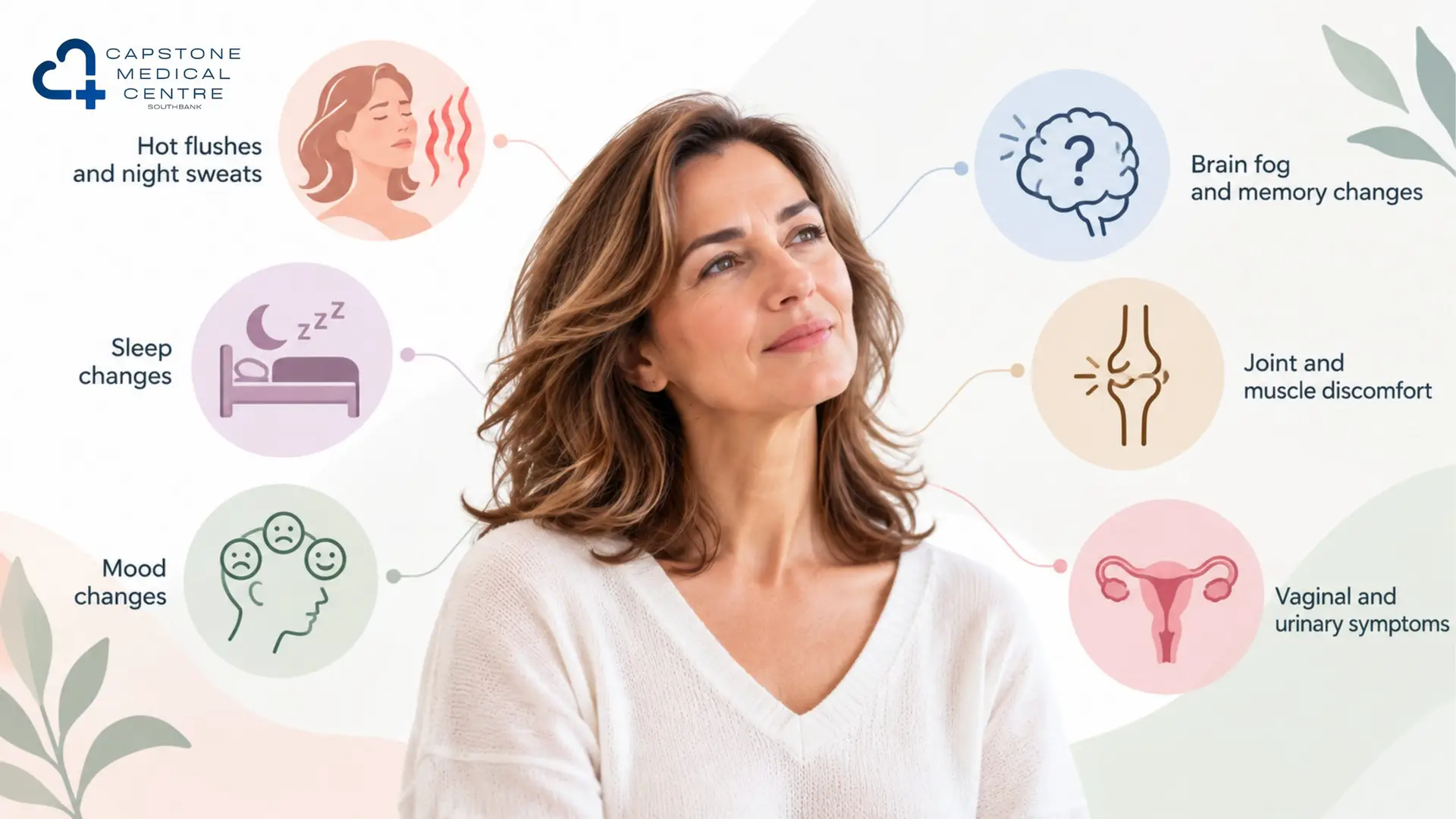
[Educational Graphic]
Suggested graphic: Common menopause symptoms around a female silhouette, including hot flushes, sleep changes, mood changes, brain fog, joint discomfort and vaginal symptoms.
What Causes Menopause?
Menopause happens naturally as ovarian function changes with age. The ovaries gradually produce less oestrogen and progesterone, which changes your menstrual cycle and can trigger menopause symptoms.
Certain medical treatments or surgery involving the ovaries can also cause menopause earlier.
Every woman’s experience is different. Genetics and general health can influence when menopause begins, while sleep, stress, lifestyle and other health conditions can affect how you experience the symptoms.
It is also important not to blame every new symptom on menopause.
Fatigue, mood changes, poor concentration and changes in menstrual bleeding can have other causes. Your GP can review the overall picture and decide whether another condition needs investigation.
When Should You See a GP About Menopause?
You do not need to wait until menopause symptoms become severe before asking for help.
Consider speaking with your GP if symptoms are affecting your:
- daily activities
- sleep
- work
- emotional wellbeing
- relationships
- sexual health
You should also arrange a medical assessment if you experience:
- menopause symptoms before age 45
- periods stopping before age 40
- very heavy or unusual bleeding
- bleeding after menopause
- persistent pelvic symptoms
- significant mood changes
- unexplained fatigue or weight changes
- concerns about osteoporosis or cardiovascular health
Always speak with a healthcare professional if you experience bleeding after menopause.
Do You Need a Blood Test to Diagnose Menopause?
Not always.
If you are over 45 and experiencing typical menopause symptoms along with changes to your periods, your GP can often assess menopause based on your symptoms and menstrual history.
Hormone levels can change considerably during perimenopause. For this reason, a single follicle-stimulating hormone (FSH) test may not give a clear answer.
Your GP may recommend blood tests when:
- symptoms start at a younger age
- your periods stop unexpectedly
- the diagnosis is unclear
- your symptoms could have another cause
- your doctor needs to investigate conditions such as thyroid disease or iron deficiency
Rather than automatically ordering hormone tests, your GP will consider your age, symptoms and medical history first.
Menopause Treatment and Management Options
There is no single menopause treatment that suits everyone.
The right approach depends on which symptoms bother you most, your medical history, your age, your preferences and any individual health risks.
Menopausal Hormone Therapy (MHT)
Menopausal hormone therapy, or MHT, was previously widely known as hormone replacement therapy or HRT.
MHT can effectively treat troublesome menopause symptoms, particularly hot flushes and night sweats.
Most MHT treatments contain oestrogen. If you still have a uterus, you will generally also need a progestogen to protect the lining of the uterus.
Depending on your circumstances, your doctor may prescribe MHT as:
- tablets
- skin patches
- gels
- vaginal preparations
- other prescribed formulations
Your GP can discuss the available options and help you weigh the potential benefits and risks.
Is Menopausal Hormone Therapy Safe?
MHT can be suitable for many women, but it is not appropriate for everyone.
Before recommending MHT, your GP will consider factors such as:
- your age and time since menopause
- your personal and family medical history
- breast cancer history or risk
- previous blood clots
- cardiovascular health
- migraine history
- liver disease
- unexplained vaginal bleeding
- other medical conditions
- medications you currently take
The type, dose and way you take MHT can also affect its benefits and risks.
This is why an individual medical assessment matters.
What If You Don’t Want or Can’t Use Hormone Therapy?
Hormone therapy is not the only option.
Depending on your symptoms, your GP may discuss:
- selected non-hormonal prescription medicines
- menopause-specific cognitive behavioural therapy (CBT)
- strategies to improve sleep
- regular physical activity
- resistance training
- dietary changes
- reducing smoking
- limiting excessive alcohol intake
- maintaining a healthy body weight
- stress-management strategies
If vaginal dryness, discomfort or urinary symptoms are your main concern, your GP may also discuss vaginal oestrogen or other local treatments.
Menopause and Your Long-Term Health
Menopause care is not only about controlling hot flushes.
It also provides an opportunity to look at your health more broadly as you move through midlife.
Bone Health
Your bones can lose density more quickly after menopause, which can increase the risk of osteoporosis and fractures over time.
If you have additional risk factors for osteoporosis, your GP may recommend assessing your bone health and discussing ways to protect it.
Heart Health
Your cardiovascular risk changes as you age, so midlife is a good time to review factors that you can potentially improve.
Your GP may check or discuss:
- blood pressure
- cholesterol
- blood glucose
- smoking
- weight
- physical activity
- family history
Muscle Health
Maintaining muscle strength becomes increasingly important as you get older.
Regular physical activity and resistance exercise, together with adequate nutrition, can help support strength, mobility and general health.
Menopause Treatment in Southbank, Melbourne
There is no single “normal” menopause experience.
At Capstone Medical Centre Southbank, our GPs provide women’s health consultations for patients experiencing perimenopause, menopause and other midlife health concerns.
During your appointment, your GP may ask about your menstrual cycle, symptoms, medications, medical history and relevant health risks.
From there, you can discuss whether you need further investigation and which management options may suit you.
Your consultation can also provide an opportunity to review other aspects of your health, including bone health, cardiovascular risk, mental wellbeing, sexual health and preventive care.
If you live or work in Southbank or nearby Melbourne areas and have noticed changes in your periods, hot flushes, sleep, mood, vaginal health or other possible menopause symptoms, consider discussing them with a GP.
Why Early Assessment Can Help?
You do not need to decide whether you want hormone therapy before seeing your GP.
The first step is understanding what may be causing your symptoms.
A consultation can help your GP determine whether your symptoms fit with perimenopause or menopause and whether another condition needs investigation.
It also gives you time to ask questions, understand your treatment choices and review your longer-term health.
If you develop menopause symptoms before age 45, early assessment becomes particularly important because earlier menopause may affect areas such as bone and cardiovascular health.
Frequently Asked Questions
What are the most common symptoms of perimenopause?
Common symptoms include irregular periods, hot flushes, night sweats, sleep problems, mood changes, brain fog, vaginal dryness and changes in sexual health. Some women also experience joint or muscle discomfort. Symptoms and their severity vary considerably between women.
What age does perimenopause usually start?
Perimenopause commonly starts during the 40s, although some women develop symptoms earlier. If you notice possible menopause symptoms at a younger age, speak with your GP rather than assuming menopause is the cause.
How do I know if I have reached menopause?
Menopause generally means you have gone 12 consecutive months without a menstrual period and there is no other medical explanation. If you are over 45 and have typical symptoms, your GP can often assess menopause from your symptoms and menstrual history.
Do I need a hormone blood test for menopause?
Not necessarily. If you are over 45 with typical symptoms, hormone testing may not be needed. Hormone levels fluctuate during perimenopause, so a single test may not provide a clear answer. Your GP can decide whether testing would be useful in your situation.
Is MHT the same as HRT?
Yes, they refer to the same general type of treatment. In Australia, healthcare professionals commonly use the term menopausal hormone therapy (MHT) rather than hormone replacement therapy (HRT).
Can menopause affect mental health?
Yes. Some women experience anxiety, low mood, irritability or other emotional changes during perimenopause and menopause. Poor sleep can also affect mood. If these changes persist or interfere with everyday life, discuss them with your GP.
When should I see a GP about menopause?
Consider seeing your GP if symptoms affect your sleep, work, relationships, sexual health or general wellbeing. You should also seek medical advice if symptoms begin before age 45, your periods stop before age 40, or you experience unusual bleeding. Always have bleeding after menopause medically assessed.
Can a GP help with menopause treatment?
Yes. Your GP can review your symptoms and medical history, decide whether you need any tests and discuss hormonal and non-hormonal treatment options. Your GP can also review areas such as bone, cardiovascular and preventive health.
Book a Women’s Health Appointment in Southbank
If perimenopause or menopause symptoms are affecting your everyday life, you do not have to work out what is happening on your own.
A GP can help you understand your symptoms, consider other possible causes and talk through the treatment options that may suit you.
Capstone Medical Centre Southbank provides women’s health and general practice services for patients in Southbank and surrounding Melbourne areas.
You can book an appointment with one of our GPs to discuss your symptoms, concerns and treatment options.
References
- Australasian Menopause Society. Menopause and perimenopause information and symptom guidance.
- Royal Australian College of General Practitioners (RACGP). Menopause assessment and menopausal hormone therapy guidance.
- National Institute for Health and Care Excellence (NICE). Menopause: identification and management. Guideline NG23.
- The North American Menopause Society. The 2022 Hormone Therapy Position Statement of The North American Menopause Society. Menopause. 2022;29(7):767–794.