

A persistent cough at night can be frustrating, making it difficult to get quality sleep and leaving you feeling tired the next day. While an occasional cough during a cold is common, a cough that regularly worsens after lying down may point to an underlying health condition that deserves medical assessment.
At Capstone Medical Centre Southbank, our GPs help patients identify the cause of ongoing coughs and recommend appropriate investigations or treatment when needed. Understanding why your cough occurs at night is the first step towards finding relief.
Quick Overview of Persistent Cough at Night
Night-time coughing happens because several body changes occur when you lie down. Mucus can collect at the back of the throat, stomach acid may more easily travel into the oesophagus, and airways can become more sensitive during sleep.
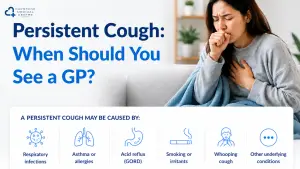
Common causes include:
- Asthma
- Post-viral cough after a respiratory infection
- Allergies
- Postnasal drip
- Acid reflux (GORD)
- Smoking or vaping
- Certain medications, including ACE inhibitors
Many people notice their cough becomes worse shortly after going to bed or wakes them repeatedly throughout the night. Depending on the cause, the cough may be dry, produce mucus, or occur alongside wheezing, nasal congestion, heartburn, or shortness of breath.
If your symptoms continue for more than three weeks or interfere with your sleep, it is worth arranging a medical assessment.
Educational Graphic
Suggested infographic: “Common Causes of Persistent Night-Time Cough” showing asthma, reflux, allergies, postnasal drip, infection, and smoking.
Common Questions or Concerns About Persistent Cough at Night
One of the most common questions patients ask is why they cough only at night while feeling relatively well during the day. In many cases, lying flat changes how mucus or stomach acid moves through the body, triggering irritation in the throat or airways.
A night-time cough may also be associated with:
- Asthma that becomes worse overnight
- Seasonal allergies or dust mites in the bedroom
- Viral infections that leave lingering airway inflammation
- Gastro-oesophageal reflux disease (GORD)
- Chronic sinus congestion causing postnasal drip
Most coughs improve over time, but persistent symptoms should not simply be ignored. A GP can assess your medical history, examine your symptoms, and determine whether further investigation is needed.
You may also find our related article, Persistent Cough: When Should You See a Doctor?, helpful for understanding when an ongoing cough requires medical attention.
When Should You Seek Medical Advice?
Although many coughs resolve on their own, you should arrange a GP appointment if your cough:
- Lasts longer than three weeks
- Frequently wakes you during the night
- Causes shortness of breath or wheezing
- Produces blood-stained mucus
- Is accompanied by unexplained weight loss
- Occurs with chest pain or persistent fever
- Continues after recovering from a viral illness
Children, older adults, pregnant women, and people with chronic lung disease should seek medical advice sooner if symptoms are ongoing or worsening.
Early assessment helps identify the underlying cause and guides the most appropriate management.
What to Expect During an Appointment
During your consultation, your GP will ask about:
- When your cough started
- Whether it is dry or productive
- Symptoms that occur alongside the cough
- Smoking or vaping history
- Current medications
- Any history of asthma, allergies, or reflux
Depending on your symptoms, your doctor may recommend:
- A physical examination
- Lung function assessment
- Chest X-ray if appropriate
- Pathology tests
- Allergy assessment
- Treatment for asthma, reflux, or upper airway conditions
- Follow-up monitoring if symptoms persist
Your treatment plan will depend on the identified cause rather than simply suppressing the cough.
Persistent Cough at Night Services in Southbank
If you have a persistent cough at night, the team at Capstone Medical Centre Southbank can assess your symptoms and help determine the underlying cause.
Our GPs provide comprehensive general practice services for respiratory symptoms, including ongoing cough assessment, asthma management, allergy advice, respiratory infections, referrals for imaging where appropriate, and follow-up care.
Conveniently located in Southbank, our clinic offers accessible healthcare for residents, workers, and students seeking timely medical advice for persistent respiratory symptoms.
Clinic / Doctor Image
Alt text: GP consulting with a patient about a persistent cough at Capstone Medical Centre Southbank.
Frequently Asked Questions
How common is persistent cough at night?
Night-time coughing is relatively common and may occur during viral illnesses, seasonal allergies, asthma, or acid reflux. While many cases improve within a few weeks, a cough that continues beyond three weeks or repeatedly interrupts sleep should be assessed by a GP.
Can symptoms vary between people?
Yes. Some people experience a dry tickly cough, while others cough up mucus. Additional symptoms such as wheezing, heartburn, blocked nose, or shortness of breath may help identify the underlying cause.
Is a referral required?
No. You do not need a referral to book an appointment with a GP at Capstone Medical Centre Southbank. If specialist assessment or additional investigations are required, your GP can arrange the appropriate referrals.