

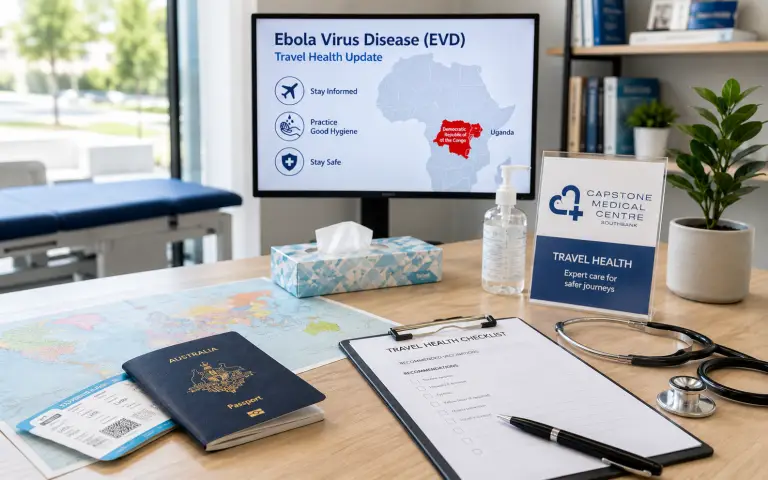
Ebola Virus Disease travel updates are important for Australians planning overseas travel, particularly for people visiting areas with recent infectious disease outbreaks. While Ebola disease remains rare, understanding current travel health advice, symptoms, and prevention steps can help travellers make more informed decisions before departure.
Ebola disease is rare, but it can cause serious illness. Travellers should understand current health advice before overseas travel.
In May 2026, the World Health Organization confirmed outbreaks linked to Bundibugyo virus disease in parts of the Democratic Republic of the Congo and Uganda. Australian health authorities currently consider the local risk in Australia to be low. Before travelling, check official travel advice and learn about health risks in your destination.
People living or working near Southbank may benefit from a travel health appointment before travelling. A GP can discuss vaccinations, travel plans, and ways to reduce infection risks. Travel health appointments can also help patients prepare medicines, travel documents, and safety plans before overseas trips.
Capstone Medical Centre Southbank provides travel health advice for patients preparing for overseas travel. This may include guidance about infectious disease prevention and when to seek medical care.
What Is Ebola Virus Disease?
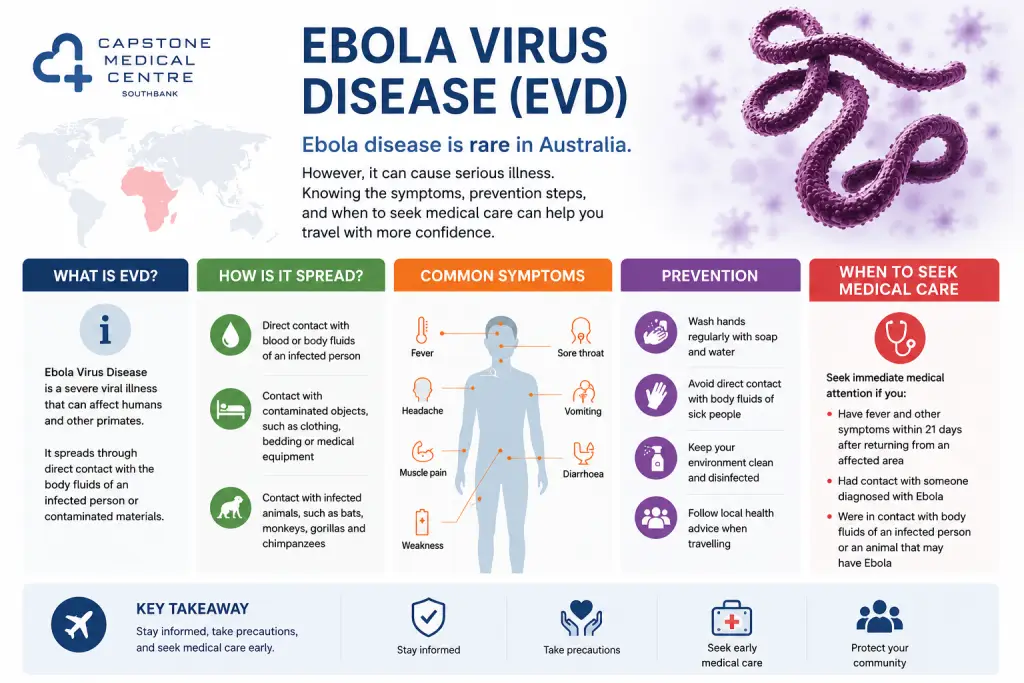
Ebola disease, also known as Ebola Virus Disease, is a rare but serious infection that viruses from the Orthoebolavirus group cause. It mainly occurs in parts of Africa and spreads through infected body fluids.
Ebola can spread through contact with blood, vomit, diarrhoea, urine, saliva, sweat, semen, breast milk, or other body fluids from a person who is infected. It may also spread through contaminated objects such as bedding, clothing, medical equipment, or surfaces exposed to infected fluids.
WHO also states that Ebola can spread from wild animals to humans. This may happen through contact with infected fruit bats, monkeys, apes, or bush meat.
Ebola does not spread like common colds or flu. But it can become severe and may sometimes be fatal. Possible exposure or symptoms after travel should always be taken seriously.The current 2026 outbreak involves Bundibugyo virus disease. WHO states there is currently no approved vaccine or specific treatment for this type of Ebola.
Why Are Ebola Virus Disease Updates Important?
Ebola Virus Disease updates are important because outbreaks can change quickly. Risk levels can change quickly when new cases are reported.
For travellers, current information helps with:
- Understanding whether a destination has an active outbreak
- Knowing whether official travel advice has changed
- Recognising symptoms after possible exposure
- Reducing contact risks while overseas
- Knowing when to contact a doctor or emergency health service
- Planning safer travel for work, family visits, volunteering, or humanitarian reasons
In May 2026, WHO declared the Ebola Bundibugyo outbreak in the Democratic Republic of the Congo and Uganda a Public Health Emergency of International Concern. WHO also confirmed it was not considered a pandemic emergency.
For most Australians, the risk of Ebola remains low. But people travelling to affected regions may need medical and travel advice before departure. This includes healthcare workers, people visiting family, and humanitarian workers.
Common Symptoms, Signs, or Concerns
Ebola symptoms may appear after an incubation period, which can vary depending on the exposure. Early symptoms can look similar to flu, malaria, or other travel illnesses.This is why travel history is important when seeking medical care.
Common symptoms may include:
- Fever
- Severe tiredness or weakness
- Headache
- Muscle aches
- Sore throat
- Vomiting
- Diarrhoea
- Abdominal pain
- Rash
- Unexplained bleeding or bruising in some cases
The current outbreak has included symptoms such as fever, headache, vomiting, severe weakness, abdominal pain, nosebleeds, and vomiting blood, according to United States CDC reporting on the 2026 situation.
Not every person will experience all symptoms. Some symptoms may start mildly before becoming more serious.
Many Ebola symptoms are similar to other illnesses after travel. If someone recently travelled to an outbreak area or may have been exposed to Ebola, they should seek urgent medical advice. They should also call ahead before visiting a clinic or hospital.
Common Causes or Risk Factors
The main risk factor for Ebola is exposure to an outbreak area or direct contact with an infected person, their body fluids, or contaminated materials.
Travellers may be at increased risk if they:
- Travel to areas with active Ebola outbreaks
- Care for someone who is unwell in an affected region
- Attend funerals or burial practices involving direct contact with a body
- Work in healthcare or humanitarian settings without adequate protective equipment
- Handle contaminated bedding, clothing, surfaces, or medical items
- Have contact with wild animals such as fruit bats, monkeys, or apes
- Hunt, prepare, or eat bush meat
- Ignore official travel advice or enter restricted outbreak zones
The Australian Centre for Disease Control advises travellers to avoid outbreak areas, avoid contact with people who have Ebola disease or their body fluids, avoid contact with unwell people and contaminated objects, and avoid interaction with wild animals or bush meat.
Health authorities generally consider routine tourists at low risk if they avoid outbreak areas, sick people, and body fluids.
People should still check official travel advice before departure.
When Should You Seek Medical Advice?
You should book a GP appointment before travel if you plan to visit a region affected by Ebola disease. This is especially important for healthcare work, humanitarian work, rural travel, or caring for family members overseas.
You should seek urgent medical advice after travel if you develop symptoms such as fever, vomiting, diarrhoea, severe weakness, abdominal pain, bleeding, or sudden illness after visiting an Ebola-affected region.
If you think Ebola exposure is possible:
- Call ahead before attending a GP clinic, urgent care centre, or hospital
- Explain your symptoms and recent travel history clearly
- Mention any contact with sick people, healthcare facilities, funerals, or body fluids
- Avoid close contact with others while waiting for medical advice
- Follow instructions from health professionals or public health authorities
If symptoms are severe or rapidly worsening, call emergency services on 000.
Do not attend a medical clinic without calling first if you believe Ebola exposure is possible. Calling ahead helps healthcare teams provide safe advice and arrange appropriate infection control steps.
Current Ebola Virus Disease Updates for Travellers
At the time of writing, WHO has reported an Ebola outbreak caused by Bundibugyo virus disease in the Democratic Republic of the Congo and Uganda. WHO reported rapid increases in suspected and confirmed cases in affected regions of the DRC during May 2026, with confirmed cases also reported in Uganda.
The Australian Centre for Disease Control states that the risk to Australia is low. Travellers should still follow official travel advice. They should avoid outbreak areas, sick people, body fluids, wild animals, and bush meat in affected regions.
Because outbreak information can change, patients should check official sources before travelling, including:
A GP travel health appointment can also help patients understand how general travel health risks apply to their itinerary. This may include advice about malaria prevention, routine vaccinations, food and water safety, travel insurance, medication planning, and what to do if illness develops overseas.
Treatment, Management, Testing, or Next Steps
There is currently no approved vaccine or specific treatment for Bundibugyo virus disease, according to WHO. Treatment focuses on supportive care and infection control.
Supportive care may include treatment for dehydration, maintaining oxygen levels and blood pressure, managing complications, and monitoring organ function. Early medical care can be important, but patients should not try to self-diagnose or manage a suspected Ebola exposure at home without professional advice.
Specialist health teams arrange Ebola testing when needed. Doctors do not perform Ebola testing as a routine test during a standard GP appointment. If doctors suspect Ebola, health professionals follow public health protocols to protect the patient, healthcare workers, and the community.
For travellers, the best next step is prevention and preparation. Before travelling, patients may benefit from:
- Reviewing destination-specific travel health risks
- Checking official travel warnings
- Discussing routine and travel vaccinations
- Understanding malaria and mosquito-borne disease prevention
- Preparing a travel medical kit
- Knowing when and how to seek care overseas
- Saving emergency contact numbers
- Planning what to do if symptoms develop after returning to Australia
A GP can provide general travel health advice and discuss whether specialist travel medicine or infectious disease support may be needed.
Ebola Virus Disease Travel Advice in Southbank
Capstone Medical Centre Southbank provides travel health advice for people living, studying, or working in Southbank and nearby Melbourne suburbs.
A travel health appointment may be helpful before visiting regions affected by Ebola disease or other infectious disease outbreaks.
During an appointment, a GP may ask about your destination, travel dates, planned activities, accommodation, medical history, medications, vaccination history, and whether you may be visiting higher-risk areas. This helps provide advice suited to your travel plans.
Travel health advice can help with many overseas trips. It can also support safer travel for holidays, business trips, family visits, volunteer work, and extended overseas stays.
If you are unsure whether your destination has current health alerts, booking an appointment before travel can help you understand the latest guidance and prepare more confidently.
Benefits of Early Assessment or Care
Early travel health advice can help reduce avoidable risks and give patients a clearer plan before departure. This is particularly important when travelling to areas where infectious disease outbreaks have been reported or where healthcare access may be limited.
Early assessment may help patients:
- Understand current travel health warnings
- Recognise symptoms that need urgent attention
- Reduce exposure risks while overseas
- Prepare medications and documents before travel
- Review vaccinations and preventive care
- Know when to call a GP, hospital, or public health service
- Avoid delays if symptoms appear after returning home
For Ebola specifically, early advice is important because prevention and rapid reporting of possible exposure are key. Patients should not panic, but they should be informed, cautious, and guided by official health advice.
If you are planning overseas travel and have questions about Ebola disease updates, travel risks, or symptoms after returning home, you can contact Capstone Medical Centre Southbank to discuss whether a GP appointment may help.
Frequently Asked Questions
What are the common symptoms of Ebola Virus Disease?
Common symptoms may include fever, severe weakness, headache, muscle aches, sore throat, vomiting, diarrhoea, abdominal pain, rash, and sometimes unexplained bleeding or bruising. Symptoms can look similar to other travel-related infections, so recent travel history is important. If you have been in an Ebola-affected area and develop symptoms, call ahead before attending a clinic or hospital.
When should I see a doctor about Ebola Virus Disease?
You should seek medical advice before travel if you are visiting an affected region or may be exposed through healthcare, humanitarian work, or close contact with local communities. After travel, seek urgent advice if you develop fever, vomiting, diarrhoea, severe weakness, abdominal pain, or bleeding after possible exposure. Call ahead before attending healthcare services.
Is Ebola common in Australia?
Ebola disease is not common in Australia, and the current risk remains low. Travellers returning from outbreak areas should still follow official advice and seek medical care if symptoms develop after possible exposure.
Can Ebola be prevented with a vaccine?
Some Ebola vaccines exist for specific Ebola virus species, but WHO has reported that there is currently no approved vaccine or specific treatment for the Bundibugyo virus disease involved in the 2026 DRC and Uganda outbreak. Travellers should rely on current official advice, prevention measures, and early medical guidance.
What should I do if I feel unwell after travelling?
If you feel unwell after travel, especially with fever, vomiting, diarrhoea, severe weakness, or abdominal pain, contact a doctor and explain where you travelled. If you visited an Ebola-affected area or had possible exposure, call ahead before attending a clinic or hospital so appropriate advice and precautions can be arranged.
Is treatment covered by Medicare?
Medicare may cover some GP consultations and medically necessary services, depending on your eligibility. Travel health services, vaccines, and some preventive treatments may have out-of-pocket costs. It is best to contact Capstone Medical Centre Southbank before booking to confirm fees and Medicare rebate information.