

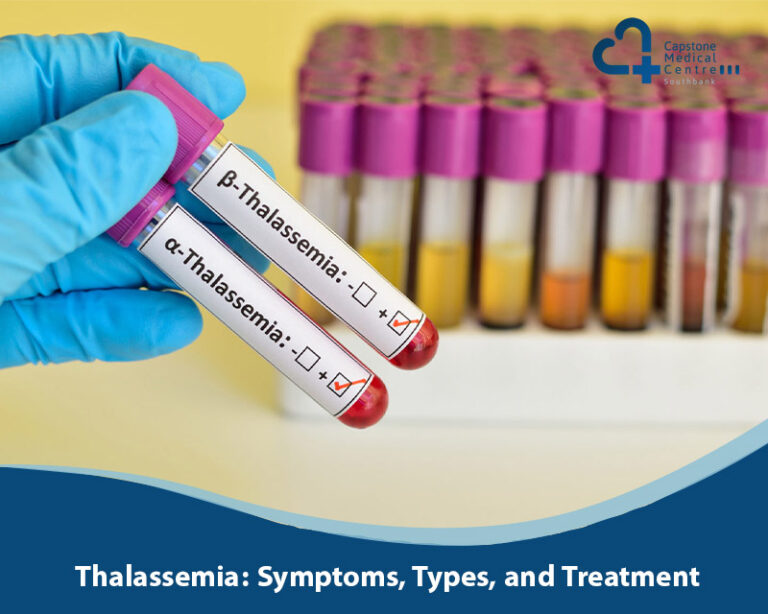
Thalassemia is an inherited blood disorder that disrupts the body’s production of hemoglobin, a vital protein within red blood cells responsible for carrying oxygen throughout the body. This disruption leads to a shortage of healthy red blood cells, causing a condition known as anemia.
Understanding thalassemia is crucial because it can significantly impact a person’s health and well-being. Early diagnosis and proper management are essential for maintaining a good quality of life. This guide from Capstone Medical Centre will discuss the various types of thalassemia, their symptoms, and available treatment options.
What is Thalassemia?
Thalassemia, an inherited blood disorder, affects the way your body produces hemoglobin, the protein in red blood cells that carries oxygen. A mutation in genes responsible for hemoglobin production disrupts this process, leading to a shortage of healthy red blood cells. This deficiency results in anemia, a condition characterized by fatigue, weakness, and shortness of breath.
- Might be interested in: What are the Common types of anemia?
There are two main types of thalassemia: alpha thalassemia and beta thalassemia. The severity of the condition depends on the number of genes mutated and the specific type of thalassemia inherited.
Prevalence of Thalassemia
While thalassemia can occur in any ethnicity, certain populations have a higher carrier rate. Multicultural communities with origins in Southeast Asia, the Mediterranean, and the Middle East have a higher prevalence of thalassemia carriers.
Understanding thalassemia is particularly important in these communities due to the increased chance of the condition being passed down to children if both parents are carriers.
Carrier vs. Having Thalassemia
It’s important to distinguish between being a carrier and having thalassemia. Carriers typically have one mutated gene and experience no symptoms. However, they can pass the mutated gene on to their offspring. If a child inherits a mutated gene from both parents, they develop thalassemia with varying degrees of severity.
Symptoms of Thalassemia
The symptoms of thalassemia vary depending on the type and severity of the condition. Some individuals may experience no symptoms or very mild ones, while others face significant challenges in their daily lives.
Here are the common symptoms and their impact:
- Fatigue and Weakness: Due to a lack of healthy red blood cells effectively delivering oxygen, individuals with thalassemia often experience persistent fatigue and weakness. This can significantly impact their energy levels, making it difficult to keep up with daily activities, work, or school.
- Pale Skin: Reduced hemoglobin levels lead to pale skin, as there’s less oxygen circulating to deliver its characteristic pink hue. This paleness can be a noticeable sign, particularly in individuals with darker skin tones.
- Facial Bone Deformities: An enlarged bone marrow can cause facial bone changes in severe cases of thalassemia. This might manifest as a broad forehead, prominent cheekbones, and a thin, bony ridge around the eyes.
- Slow Growth and Development: Children with thalassemia may experience delayed growth and development due to insufficient oxygen reaching their growing tissues. This can affect their height, weight, and even puberty timing.
- Shortness of Breath: As the body struggles to receive adequate oxygen, individuals with thalassemia may experience shortness of breath, especially during physical exertion. This can significantly limit their ability to participate in activities they might otherwise enjoy.
- Dark Urine: When the body destroys a large number of abnormal red blood cells, it releases bilirubin, a yellowish waste product, into the bloodstream. This can lead to dark-coloured urine, a sign that the body is working overtime to remove these damaged cells.
- Swollen Abdomen: In thalassemia, the spleen, an organ that filters blood cells, often enlarges as it attempts to compensate for the increased destruction of red blood cells. This can cause a noticeable swelling in the abdomen.
- Poor Appetite: Fatigue and the body’s struggle to absorb nutrients can lead to a poor appetite in individuals with thalassemia. This can further worsen their overall health and energy levels.
Impact on Daily Life
The combination of these symptoms can significantly impact a person’s daily life. From struggling with everyday tasks due to fatigue to limitations in physical activities due to shortness of breath, thalassemia can affect a person’s ability to work, socialize, and participate in hobbies they enjoy.
Early diagnosis and proper management are crucial for minimizing the impact of these symptoms and improving quality of life.
If you are experiencing any of these symptoms, particularly if you have a family history of thalassemia, it’s important to consult a GP from Capstone Medical Centre for a proper diagnosis and to discuss treatment options.
Types of Thalassemia
Thalassemia can be categorized based on the severity and the type of globin chain affected (alpha or beta). Here’s a breakdown of the main types:
Thalassemia Trait
This is the mildest form of thalassemia. Individuals inherit only one mutated gene, usually from one parent. They typically experience no symptoms or very mild ones, such as slight fatigue.
Thalassemia trait carriers might have slightly microcytic anemia (smaller red blood cells) detectable on a blood test, but it rarely requires any treatment.
Thalassemia Minor
Individuals inherit two mutated genes in this form, but not necessarily the most severe mutations. While symptoms can vary, they are generally mild to moderate. People with thalassemia minor may experience fatigue, pale skin, and an increased susceptibility to infections.
They might also have a slightly enlarged spleen. However, most individuals with thalassemia minor can lead relatively normal lives without requiring regular treatment.
Thalassemia Major
This is the most severe form of thalassemia. Individuals inherit two severely mutated genes, significantly impacting hemoglobin production. Symptoms typically appear in early childhood and can be quite debilitating. They include profound fatigue, weakness, facial bone deformities, delayed growth and development, and severe shortness of breath.
Regular blood transfusions and iron chelation therapy are crucial for managing thalassemia major.
Thalassemia Trait vs. Minor vs. Major
The key difference lies in the severity of symptoms and the need for treatment. Carriers of the trait (one mutated gene) experience no significant symptoms. Thalassemia minor (two mutated genes) presents with mild to moderate symptoms and may not require treatment.
Thalassemia major (two severely mutated genes) has the most severe symptoms and requires ongoing medical management.
Thalassemia Tests and Diagnosis
Early diagnosis of thalassemia is crucial for effective management and improving quality of life. Here’s an overview of the testing process and interpreting results:
Importance of Thalassemia Testing
Testing for thalassemia is particularly important for individuals with a family history of the condition or those belonging to high-risk ethnicities. Early detection allows for proper monitoring and intervention before symptoms become severe. Additionally, carrier screening before pregnancy can help couples make informed decisions about family planning.
The Testing Process
A complete blood count (CBC) is usually the first step in diagnosing thalassemia. This basic blood test can reveal red blood cell size and count abnormalities. Further tests like hemoglobin electrophoresis and globin gene analysis might be recommended if a CBC raises suspicion of thalassemia. These tests provide a more detailed picture of hemoglobin production and identify thalassemia’s specific type and severity.
Understanding the Results
Test results will indicate whether you are a carrier, have a thalassemia minor, or have a thalassemia major. Being a carrier typically means you have one mutated gene and likely experience no symptoms. Thalassemia minor usually presents with mild symptoms and may not require treatment.
However, a diagnosis of thalassemia major necessitates close medical follow-up and potentially lifelong treatment plans.
Treatment for Thalassemia
There is currently no cure for thalassemia. However, effective treatment options can significantly improve the quality of life for individuals with this condition.
Here’s an overview of the primary treatment approaches and a specific focus on iron infusion:
- Treatment Options: The specific treatment plan depends on the type and severity of thalassemia.
- Blood Transfusions: Regular blood transfusions are the mainstay of treatment for thalassemia major. These transfusions replenish healthy red blood cells, alleviating symptoms like fatigue and shortness of breath.
- Iron Chelation Therapy: Frequent blood transfusions can lead to iron overload in the body. Iron chelation therapy helps remove excess iron through oral or injection medications. Iron infusion is a potential treatment option for severe iron overload cases.
- Splenectomy: In some cases, an enlarged spleen due to increased red blood cell destruction might require surgical removal (splenectomy).
- Bone Marrow Transplant: A bone marrow transplant can be a potentially curative option for certain individuals. This procedure replaces diseased bone marrow with healthy stem cells from a compatible donor.
Iron Infusion Treatment
Iron overload is a major complication of chronic blood transfusions. In severe cases, iron chelation medications may not be enough to manage excess iron. Iron infusion is a specialized medical procedure where a chelation medication is administered directly into the bloodstream. This can be a highly effective way to remove excess iron and prevent organ damage.
Might be interested in: Is Iron Infusion Safe? Benefits & Side Effects
Iron Infusion Near Me
If you’re in Southbank, Australia, and require iron infusion treatment, consider consulting a doctor specializing in thalassemia management at Capstone Medical Centre, a potential healthcare provider you can explore.
Iron Infusion Cost
The cost of iron infusion can vary depending on factors like the type of medication used, treatment duration, and facility fees. The cost of Iron infusion is listed on the Procedures fees page.
Conclusion
Living with thalassemia requires ongoing medical management. However, with advancements in treatment and proper care, individuals with thalassemia can lead fulfilling and active lives. Discuss testing and treatment options with your doctor if you have any concerns about thalassemia.
Sources:
- National Thalassemia Society (Australia): www.tasca.org.au
- Thalassaemia and Sickle Cell Australia: www.tasca.org.au
- The Cooley’s Anemia Foundation: www.thalassemia.org
- National Human Genome Research Institute – Thalassemia: www.genome.gov/Genetic-Disorders/Thalassemia
- Mayo Clinic – Thalassemia: www.mayoclinic.org/diseases-conditions/thalassemia/symptoms-causes/syc-20354995