


GLP-1 weight loss medications are increasingly being used as part of medically supervised weight management. GLP-1 weight loss medications such as semaglutide, along with dual GIP/GLP-1 therapies such as tirzepatide, can influence appetite, blood glucose control and body weight. Research is now examining whether these treatments may also offer important benefits beyond weight loss, including effects on cardiovascular health, kidney health and other obesity-related conditions.
Large clinical trials have investigated the wider health effects of these medicines, leading to growing interest in their role in cardiometabolic health. However, GLP-1 weight loss medications should not be considered proven anti-ageing or longevity treatments.
At Capstone Medical Centre Southbank, patients can discuss weight management, metabolic health and cardiovascular risk with a GP as part of an individual medical assessment.
What Are GLP-1 and GIP Weight Loss Medications?
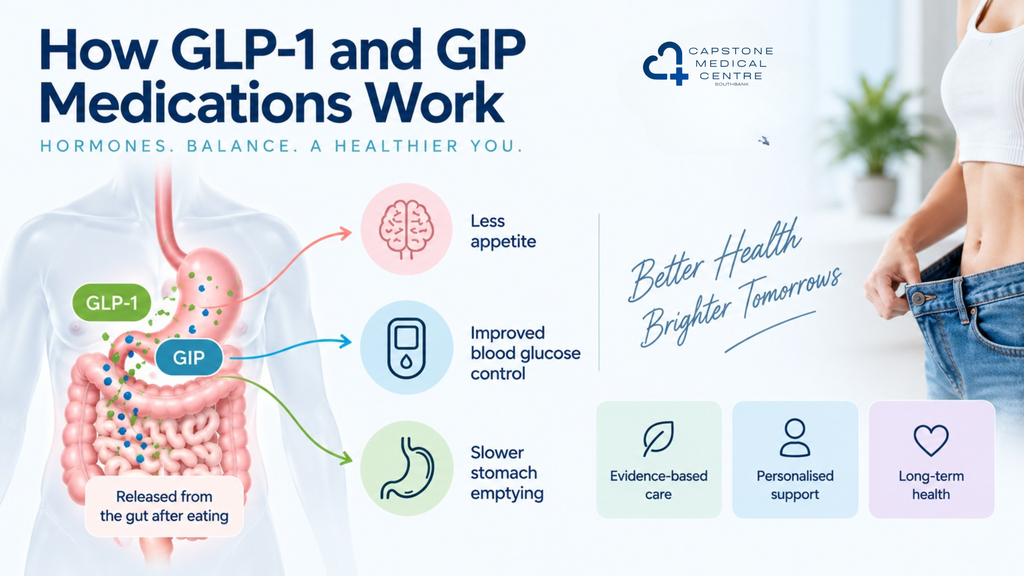
GLP-1 stands for glucagon-like peptide-1, a hormone naturally released by the gut after eating.
It has several important functions within the body. GLP-1 helps stimulate insulin release, reduces glucagon secretion, slows stomach emptying and sends signals to the brain that contribute to feelings of fullness or satiety.
Semaglutide is a medicine that mimics the effects of GLP-1.
Tirzepatide works differently because it acts on receptors for two gut hormones: GLP-1 and GIP, or glucose-dependent insulinotropic polypeptide.
These effects can reduce appetite and energy intake, improve blood glucose control and produce substantial weight loss in some patients.
Importantly, these are prescription medicines. Whether they are appropriate depends on factors such as a person’s medical history, current health, medications, treatment goals and potential risks.
Their increasing use has also raised another question: are the benefits entirely explained by weight loss, or could these treatments have wider effects on cardiometabolic health?
How GLP 1 and GIP Medications Work | Capstone Medical Centre SouthbankWhy Are GLP-1 Weight Loss Medications Important?
Obesity is associated with a range of long-term health conditions, including type 2 diabetes, cardiovascular disease, sleep apnoea, kidney disease and some forms of heart failure.
Effective weight management may therefore involve much more than changing a number on the scales.
Research into GLP-1 and GIP therapies is increasingly examining how treatment may influence some of the diseases that contribute significantly to long-term illness and premature mortality.
This has helped shift the medical conversation away from considering obesity primarily as an appearance or lifestyle issue.
For suitable patients, addressing obesity may instead form part of a broader strategy involving cardiovascular risk reduction, metabolic health, nutrition, physical activity and management of existing medical conditions.
Benefits Beyond Weight Loss: What Does the Research Show?
Cardiovascular Health
One of the most significant developments has come from the SELECT clinical trial.
The study included more than 17,000 adults who were overweight or living with obesity and had established cardiovascular disease but did not have diabetes.
Participants receiving semaglutide 2.4 mg had approximately a 20% lower risk of major cardiovascular events — including cardiovascular death, non-fatal heart attack or non-fatal stroke — compared with participants receiving placebo.
The findings demonstrated that, in the population studied, treatment had clinically important implications extending beyond the amount of weight lost.
Heart Failure
Researchers have also investigated semaglutide in people living with obesity-related heart failure with preserved ejection fraction, known as HFpEF.
In the STEP-HFpEF trial, participants receiving semaglutide experienced greater weight loss as well as improvements in heart-failure symptoms, physical limitations and exercise capacity compared with placebo.
This is particularly relevant because obesity can contribute significantly to the symptoms and progression of HFpEF.
Kidney Health
Chronic kidney disease is an important cause of illness and premature mortality, particularly among people living with type 2 diabetes.
The FLOW trial investigated semaglutide in people with type 2 diabetes and chronic kidney disease.
The study found that semaglutide significantly reduced the risk of major kidney-related outcomes and cardiovascular death compared with placebo.
This does not mean GLP-1 medicines replace other established kidney-protective treatments. Depending on the individual, management may involve several approaches, including blood-pressure control, lipid-lowering treatment, SGLT2 inhibitors and lifestyle measures.
Tirzepatide and Dual GIP/GLP-1 Therapy
Tirzepatide has further expanded interest in this area.
In the SURMOUNT-1 trial, adults with obesity or overweight without diabetes experienced substantial average weight loss with tirzepatide.
Research has subsequently examined tirzepatide in other obesity-associated conditions, including obstructive sleep apnoea and metabolic dysfunction-associated steatohepatitis with liver fibrosis.
Together, these studies are one reason these treatments are increasingly discussed in the context of cardiometabolic medicine rather than being viewed simply as “weight-loss injections”.
Are GLP-1 Medications Longevity Drugs?
Not based on the evidence currently available.
There is an important difference between reducing diseases associated with premature death and demonstrating that a medicine directly increases human lifespan.
Research has shown that some GLP-1 therapies can reduce major cardiovascular events in selected populations. Evidence has also demonstrated benefits involving diabetes, kidney disease, heart failure and other obesity-related health conditions.
Because these conditions can significantly affect both lifespan and quality of life, appropriate treatment may potentially contribute to improved healthspan — the years of life spent in relatively good health.
However, this should not be interpreted as evidence that a healthy person should use GLP-1 or GIP medications as an anti-ageing treatment.
These medicines have not been proven to extend lifespan in otherwise healthy people.
Healthy Ageing Is About More Than Body Weight
Weight is only one part of long-term health.
Healthy ageing also depends on maintaining:
- cardiovascular fitness
- skeletal muscle
- physical strength
- metabolic health
- bone health
- adequate nutrition
- healthy sleep
- cognitive and psychological well-being.
This is particularly relevant when using medications that substantially suppress appetite.
If a person’s calorie and protein intake becomes too low, weight loss may involve loss of lean tissue as well as body fat. Maintaining muscle can be particularly important as people get older.
For this reason, the goal of treatment should not necessarily be to lose as much weight as possible.
A more appropriate objective may be to reduce excess body fat while supporting muscle, strength, nutrition, physical function and metabolic health.
A GP may consider these broader factors when discussing weight management and overall health with a patient.
What Are the Possible Side Effects and Concerns?
GLP-1 and GIP therapies are prescription medications and are not appropriate for everyone.
Common adverse effects can include:
- nausea
- vomiting
- diarrhoea
- constipation
- abdominal discomfort.
Gallbladder disease can also occur, and other less common but clinically important complications need to be considered as part of an individual medical assessment.
Patients should also discuss how treatment fits into a longer-term weight-management strategy.
Obesity is often a chronic condition rather than something permanently resolved by a short course of medication.
Research following withdrawal of semaglutide has demonstrated substantial weight regain in many participants after treatment was stopped.
This highlights the importance of considering longer-term management rather than focusing only on short-term weight loss.
When Should You Speak With a GP About Weight Management?
Consider discussing your weight and metabolic health with a GP if you are concerned about your weight or if it is occurring alongside other health issues such as high blood pressure, abnormal cholesterol levels, type 2 diabetes, cardiovascular risk or other obesity-related conditions.
A GP consultation can help assess the broader picture rather than considering body weight in isolation.
Depending on your circumstances, assessment may include discussion of:
- your medical and family history
- current medications
- previous approaches to weight management
- blood pressure
- blood glucose and diabetes risk
- cholesterol and cardiovascular risk
- nutrition and physical activity
- sleep and psychological well-being
- other health conditions that may affect weight or treatment decisions.
If prescription weight-management medication is being considered, individual assessment is important because suitability, potential benefits and risks vary between patients.
GLP-1 and Weight Management Assessment in Southbank
Patients looking for a GP in Southbank can discuss weight management, metabolic health and related risk factors with a doctor at Capstone Medical Centre Southbank.
A GP assessment can help determine which factors may be contributing to weight or metabolic concerns and whether further investigations or management should be considered.
Depending on individual circumstances, this may include health screening, pathology testing, cardiovascular risk assessment, lifestyle support, management of existing medical conditions or discussion of prescription treatment options where clinically appropriate.
Weight management should generally be considered as part of overall health rather than as a stand-alone cosmetic goal.
For people living or working in Southbank and surrounding Melbourne areas, having ongoing GP care can also help support monitoring and follow-up over time.
Benefits of Early Assessment and Ongoing Care
Weight-related health concerns can develop gradually, and some associated conditions may initially cause few obvious symptoms.
Earlier assessment may help identify issues such as elevated blood pressure, abnormal blood glucose, cholesterol concerns or other cardiometabolic risk factors.
Ongoing care also provides an opportunity to monitor changes in weight alongside muscle health, nutrition, physical activity and other markers of well-being.
For patients using prescription weight-management medication, follow-up can be particularly important for reviewing side effects, nutritional intake, progress and the overall treatment plan.
The aim should be broader than weight loss alone: supporting sustainable improvements in health while reducing avoidable risks.
Frequently Asked Questions
What is the difference between semaglutide and tirzepatide?
Semaglutide acts primarily on GLP-1 receptors. Tirzepatide activates receptors for both GLP-1 and GIP. Both can influence appetite, blood glucose and body weight, but they are different medicines. The most appropriate treatment, if any, depends on individual medical circumstances and should be discussed with a healthcare professional.
Do GLP-1 medications only help with weight loss?
No. Clinical trials have identified additional health benefits in selected patient groups. Research involving semaglutide has demonstrated benefits relating to cardiovascular outcomes, obesity-related HFpEF and kidney outcomes in people with type 2 diabetes and chronic kidney disease. These findings do not mean that every patient will experience the same benefits.
Can GLP-1 medications prevent heart attacks?
The SELECT trial found that semaglutide 2.4 mg reduced the risk of major cardiovascular events by approximately 20% compared with placebo in adults with overweight or obesity and established cardiovascular disease who did not have diabetes.
This result applies to the population studied and should not be interpreted as meaning semaglutide prevents heart attacks in every person who takes it.
Are GLP-1 medications anti-ageing treatments?
No. Current evidence does not establish GLP-1 or GIP medications as anti-ageing treatments or prove that they extend human lifespan.
Their potential relevance to healthy ageing comes from evidence that certain therapies can reduce the burden of diseases that affect long-term health in selected patients.
Will I regain weight if I stop taking semaglutide?
Weight regain can occur after treatment is stopped. In the STEP 1 trial extension, substantial weight regain was observed in many participants following withdrawal of semaglutide.
This is one reason patients should discuss long-term weight-management planning with their healthcare professional.
How can muscle be protected during weight loss?
Maintaining adequate nutrition, including sufficient protein, and undertaking appropriate physical activity such as resistance exercise may be important when losing weight. Individual requirements vary, particularly for older adults or people with medical conditions, so personalised advice may be appropriate.
Is a GP appointment required before using GLP-1 or GIP medications?
These are prescription medicines and require appropriate clinical assessment. A doctor needs to consider your medical history, current health, medications, potential risks and whether treatment is clinically appropriate.
Is GLP-1 weight management treatment covered by Medicare?
Medicare coverage and medicine costs depend on the type of consultation, the medicine prescribed, the patient’s circumstances and current eligibility requirements. Patients should check current costs and eligibility with their GP, pharmacy or Medicare rather than assuming that weight-management treatment will be covered.
The Bigger Picture: From Weight Loss to Cardiometabolic Health
The emergence of GLP-1 and GIP therapies represents more than the arrival of another approach to weight loss.
It also reflects a broader change in how obesity and metabolic health are understood.
Rather than waiting for excess weight to contribute to conditions such as type 2 diabetes, hypertension, sleep apnoea, cardiovascular disease or mobility problems, there may be opportunities to identify and manage risk earlier.
GLP-1 and GIP therapies are not currently proven longevity or anti-ageing medicines.
However, research showing improvements in cardiovascular outcomes, kidney health, heart-failure symptoms and other obesity-associated conditions suggests that their medical role may extend well beyond the number on the scales.
The longer-term objective is not simply living at a lower body weight. It is supporting better metabolic health, physical function and quality of life over time.
If you would like to discuss weight management, cardiovascular risk or metabolic health, you can book an appointment with a GP at Capstone Medical Centre Southbank for an individual assessment and advice based on your health needs.
References
- Lincoff AM, Brown-Frandsen K, Colhoun HM, et al. Semaglutide and cardiovascular outcomes in obesity without diabetes. New England Journal of Medicine. 2023;389:2221–2232. doi:10.1056/NEJMoa2307563.
- Kosiborod MN, Abildstrøm SZ, Borlaug BA, et al. Semaglutide in patients with heart failure with preserved ejection fraction and obesity. New England Journal of Medicine. 2023;389:1069–1084. doi:10.1056/NEJMoa2306963.
- Perkovic V, Tuttle KR, Rossing P, et al. Effects of semaglutide on chronic kidney disease in patients with type 2 diabetes. New England Journal of Medicine. 2024. doi:10.1056/NEJMoa2403347.
- Jastreboff AM, Aronne LJ, Ahmad NN, et al. Tirzepatide once weekly for the treatment of obesity. New England Journal of Medicine. 2022;387:205–216. doi:10.1056/NEJMoa2206038.
- Malhotra A, Grunstein RR, Fietze I, et al. Tirzepatide for the treatment of obstructive sleep apnea and obesity. New England Journal of Medicine. 2024;391:1193–1205.
- Loomba R, Hartman ML, Lawitz EJ, et al. Tirzepatide for metabolic dysfunction-associated steatohepatitis with liver fibrosis. New England Journal of Medicine. 2024.
- Wilding JPH, Batterham RL, Davies M, et al. Weight regain and cardiometabolic effects after withdrawal of semaglutide: the STEP 1 trial extension. Diabetes, Obesity and Metabolism. 2022;24:1553–1564.
Medical Disclaimer
This article provides general health information and is not a substitute for individual medical assessment, diagnosis or treatment. Prescription weight-management medications should be considered on an individual basis in consultation with an appropriately qualified healthcare professional.