


As winter arrives, many Australians spend less time outdoors and receive less sunlight. While Melbourne’s cooler weather encourages us to stay inside, it can also increase the risk of vitamin D deficiency, particularly in people who are already at higher risk.
Vitamin D during winter is important because vitamin D is essential for maintaining healthy bones and muscles, supporting the immune system, and helping the body absorb calcium. Although our bodies produce vitamin D when skin is exposed to sunlight, reduced sun exposure during winter can make it more difficult to maintain adequate levels.
Understanding your risk factors and recognising possible vitamin D deficiency symptoms can help you know when to seek medical advice. If you are concerned about low vitamin D, a GP at Capstone Medical Centre Southbank can assess your individual risk and advise whether further assessment or a vitamin D blood test may be appropriate.
[FEATURED IMAGE – 9:16 VERTICAL]
Suggested image: A realistic Melbourne winter outdoor scene with an adult in natural daylight, wearing winter clothing.
Alt text: Vitamin D during winter in Melbourne
Why Is Vitamin D Important?
Vitamin D plays several important roles in the body, including:
- Maintaining strong bones and teeth
- Supporting muscle strength and balance
- Helping the immune system function normally
- Assisting calcium and phosphate absorption
- Reducing the risk of osteoporosis and fractures, particularly in older adults
Research has shown that low vitamin D levels are associated with poor bone health and may contribute to muscle weakness and an increased risk of falls.
Maintaining adequate vitamin D is therefore particularly important for bone and muscle health, especially for people who may already be at increased risk of deficiency.
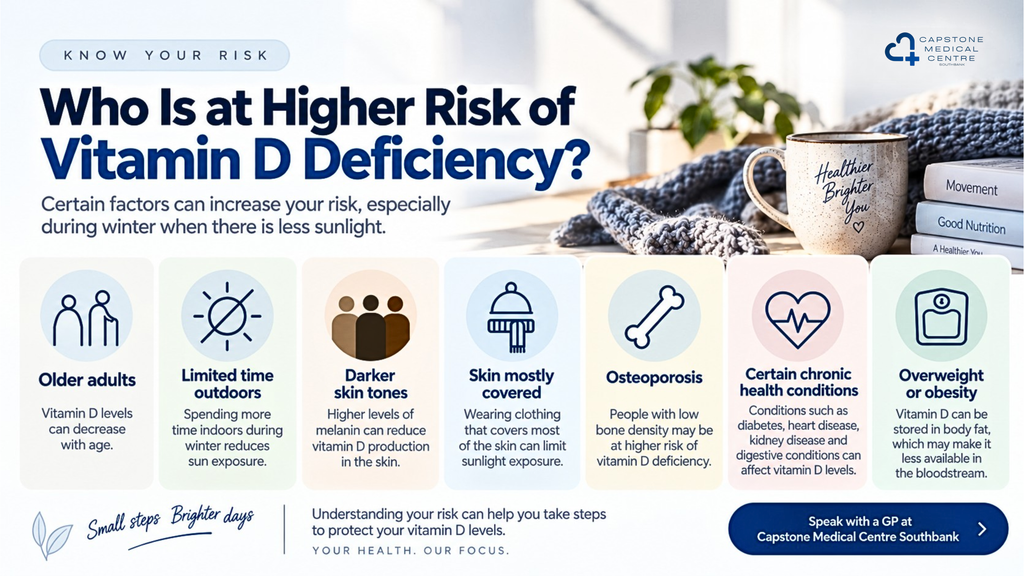
Who Is at Risk of Vitamin D Deficiency?
Anyone can become vitamin D deficient, but the risk is higher in certain groups.
These include:
- Older adults, particularly those over 65
- People who spend most of their time indoors
- People with darker skin tones
- Individuals who cover most of their skin for cultural or medical reasons
- Residents of aged care facilities
- People with osteoporosis
- People with chronic kidney, liver or gastrointestinal diseases
- Those who are overweight or obese
In Melbourne, UV levels often fall below the level needed for significant vitamin D production during much of winter.
For people with one or more of these risk factors, discussing vitamin D levels with a GP may be appropriate.
Symptoms of Vitamin D Deficiency
Many people with vitamin D deficiency have no symptoms at all.
When symptoms do occur, they may include:
- Persistent tiredness
- Muscle weakness or aches
- Bone pain
- Difficulty climbing stairs
- Frequent falls
- Stress fractures or osteoporosis in severe cases
These symptoms are not specific to vitamin D deficiency and can occur with many other health conditions.
Because of this, symptoms alone cannot confirm that your vitamin D level is low. A blood test is often needed to confirm vitamin D deficiency.
If you experience persistent fatigue, muscle weakness, bone pain or other ongoing symptoms, a GP can assess whether further investigation is appropriate.
Can Food Provide Enough Vitamin D?
Only a limited number of foods naturally contain vitamin D.
Sources include:
- Oily fish such as salmon, sardines and mackerel
- Egg yolks
- Liver
- Fortified milk and breakfast cereals
- Some fortified plant-based milk alternatives
These foods can contribute to vitamin D intake as part of a balanced diet. However, for many people, food alone is not enough to maintain optimal vitamin D levels during winter.
Your individual requirements may depend on factors such as your diet, lifestyle, sun exposure and risk of deficiency.
Should Everyone Take Vitamin D Supplements?
Not necessarily.
Most healthy adults do not need routine vitamin D supplements if they have adequate sun exposure and a balanced diet.
However, supplements may be recommended for people at increased risk of deficiency or those with confirmed low vitamin D levels.
Taking high doses of vitamin D without medical advice is not recommended. Excessive vitamin D can lead to harmful levels of calcium in the blood and other complications.
If you are concerned about your vitamin D intake or are considering supplementation, speak with a healthcare professional about whether it is appropriate for you.
How Is Vitamin D Deficiency Diagnosed?
A simple blood test can measure your vitamin D level.
Based on the results, your GP can advise whether you may need:
- Lifestyle changes
- Safe sun exposure advice
- Dietary improvements
- Vitamin D supplementation
- Follow-up testing
Treatment should always be tailored to your individual health needs.
A GP can consider your blood test results together with factors such as your age, medical history, lifestyle and symptoms before recommending appropriate next steps.
When Should You Seek Medical Advice?
Consider speaking with a GP if you are experiencing persistent tiredness, muscle weakness or aches, bone pain, frequent falls, or if you are concerned that you may be at increased risk of vitamin D deficiency.
Because many of these symptoms can have other causes, medical assessment can help determine whether a vitamin D blood test or other investigation is appropriate.
People with osteoporosis, certain chronic medical conditions or other recognised risk factors may also benefit from discussing their vitamin D status with their doctor.
Vitamin D Assessment at Capstone Medical Centre Southbank
At Capstone Medical Centre Southbank, our GPs can assess your risk of vitamin D deficiency and provide personalised advice based on your age, medical history, lifestyle and blood test results.
Where appropriate, your GP may recommend a vitamin D blood test and discuss whether lifestyle changes, dietary improvements, supplementation or follow-up testing may be suitable.
If you are experiencing fatigue, muscle weakness, bone pain, or are concerned about your vitamin D levels this winter, you can book an appointment to discuss your bone health, vitamin D status and overall wellbeing.
Frequently Asked Questions
What are the common symptoms of vitamin D deficiency?
Many people have no symptoms. When symptoms do occur, they may include persistent tiredness, muscle weakness or aches, bone pain, difficulty climbing stairs and frequent falls. Severe deficiency may be associated with stress fractures or osteoporosis.
Because these symptoms can occur with other conditions, a blood test is often needed to confirm vitamin D deficiency.
Who is most at risk of low vitamin D during winter?
People at higher risk include older adults, people who spend most of their time indoors, people with darker skin tones, those who cover most of their skin, residents of aged care facilities, and people with osteoporosis or certain chronic kidney, liver or gastrointestinal conditions.
Can I get enough vitamin D from food?
Some foods contain vitamin D, including oily fish, egg yolks, liver and fortified foods. However, only a limited number of foods naturally contain vitamin D, and food alone may not provide enough for some people during winter.
Should I take a vitamin D supplement in winter?
Not everyone needs a vitamin D supplement. A GP may recommend vitamin D supplements if you have an increased risk of deficiency or confirmed low vitamin D levels.
Avoid taking high doses without medical advice, as excessive vitamin D can cause complications.
How do I know if my vitamin D level is low?
A blood test can measure your vitamin D level. Your GP can assess your symptoms and risk factors and advise whether testing is appropriate.
References
- Australian Government Department of Health, Disability and Ageing. Vitamin D and Health.
- Royal Australian College of General Practitioners (RACGP). Guidelines for Preventive Activities in General Practice (Red Book).
- Healthy Bones Australia. Vitamin D Position Statement.
- National Health and Medical Research Council (NHMRC). Nutrient Reference Values for Australia and New Zealand.